
Benchmark equity indices Sensex and Nifty rebounded from early lows to settle higher on Wednesday following buying in Reliance Industries, Larsen & Toubro and ITC and positive trends in Asian and European markets. The 30-share BSE Sensex rose by 173.22 points or 0.26 per cent to settle at 66,118.69. The index opened lower and fell further to a low of 65,549.96 in morning trade.

India's services sector activity eased in August but growth rates for new orders remain elevated, as services firms indicated the sharpest upturn in new export business which acted as a catalyst for firms to expand their workforces as well as output, a monthly survey said on Tuesday. Despite falling from 62.3 in July to 60.1 in August, the seasonally adjusted S&P Global India Services PMI Business Activity Index indicated one of the strongest increases in output seen since mid-2010. For the 25th straight month, the headline figure was above the neutral 50 threshold.

India's services sector growth eased to a three-month low in June but service providers continued to signal positive demand trends, which resulted in a stronger increase in new business volumes and further job creation, a monthly survey said on Wednesday. The seasonally adjusted S&P Global India Services PMI Business Activity Index fell from 61.2 in May to 58.5 in June. Despite falling from May, the latest figure was consistent with a sharp pace of growth.

World Bank says India has bright prospects.

As per the findings, CEOs are less optimistic about prospects this year.

If Chinese growth starts falling, sharply or otherwise, the risk on trade might reverse.

Echoing Prime Minister Narendra Modi's views that improving the health of financial markets alone cannot fuel growth, G20 business leaders on Friday said vigorous efforts should be made to go beyond fiscal and monetary policy to kickstart world economy and create jobs.

In a recent note, the global brokerage firm said India now commands a weight of 19 per cent in the above-mentioned portfolio as compared to 18.2 per cent in September 2023. India, it said, is a large liquid market and remains a counter-weight to North Asia if a slowdown in the West occurs and China's recovery disappoints.
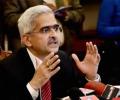
Reserve Bank Governor Shaktikanta Das has pitched for policy support from all sides -- fiscal, monetary and sectoral -- to nurture recovery of the economy hit by the second wave of the coronavirus pandemic. The dent on economic activity due to the second wave of the pandemic during April-May necessitated continuation of monetary measures to support the process of economic recovery to make it durable, Das had said while participating in the meeting of the Monetary Policy Committee (MPC) earlier in the month. "Overall, the second wave of COVID-19 has altered the near-term outlook, and policy support from all sides - fiscal, monetary and sectoral - is required to nurture recovery and expedite return to normalcy," Das said, as per the minutes of the meeting released on Friday.

The avoidable stresses and strains in ties helped in one way. It showed for the entire region how a matured India handled diplomatic relations, especially with a smaller and suspicious neighbour, with practised dignity and patience, unruffled by provocations in word, deed and action, observes N Sathiya Moorthy.

The Indian stock market does not present attractive prospects for investors in the near term amid sluggish domestic and global economic growth outlook, according to Goldman Sachs.

Whether this remains under control in the coming months will depend on the future intensity and spread of the Russia-Ukraine war, and the effectiveness of the Indian government's response, points out A K Bhattacharya.

India's growth projection released by the latest World Economic Outlook remains unchanged from its previous WEO (World Economic Outlook) update of July this summer but is a three-percentage point in 2021 and 1.6 percentage point drop from its April projections. According to the latest WEO update, released ahead of the annual meeting of the IMF and the World Bank, the world is expected to grow at 5.9 per cent in 2021 and 4.9 per cent in 2022.
Finance Minister Pranab Mukherjee today said the global slowdown will impact India's growth prospects, but expressed hope that inflation will start moderating from December.

Export sectors that showed positive growth last month included chemical, iron ore, electronics, marine products and pharmaceuticals. Decline in overall imports, including oil and gold, led to narrowing of trade deficit.
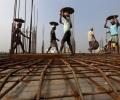
With this India will continue to retain the position of being the fastest growing emerging economy. And by 2021, its growth rate is projected to be 1.5 per cent more than China's 6 per cent.

'The Opposition will continue to be attacked through misuse of agencies, civil society will be force-marched towards extinction and India's plummeting on global indices will continue.' 'Minorities and especially Muslims will continue to have open season declared on them. Institutions will continue their decline,' predicts Aakar Patel.

Global economic situation continues to be challenging & global growth will likely remain tepid in 2012

Continuing its heavy selling spree for the eighth consecutive month, foreign investors pulled out nearly Rs 40,000 crore from the Indian equity market in May on fears of an aggressive rate hike by US Federal Reserve that dented investor sentiments. With this, net outflow by foreign portfolio investors (FPIs) from equities reached at Rs 1.69 lakh crore so far in 2022, data with depositories showed. Going ahead, FPI flows will remain volatile in the emerging markets on account of rising geo-political risk, rising inflation, tightening of monetary policy by central banks, among others, Shrikant Chouhan, Head - Equity Research (Retail), Kotak Securities said.
HSBC's downward revision is in line with similar kind of revisions by a host of other think-tanks, research houses, investment banks and other agencies like the UN, Morgan Stanley, Goldman Sachs, Merrill Lynch, Stanchart and Citi.

'Opportunity for a country like India is huge in terms of wealth creation.' 'That's the reason India is an attractive economy for investors.'

Conventional wisdom is that when the US sneezes, emerging markets like India catch a cold. And yet the Indian stock market went up last year, points out Debashish Basu.

The finance ministry has cautioned that global and regional uncertainties and domestic disruptions may keep inflationary pressures elevated in the coming months, warranting "greater vigilance" by the government and the Reserve Bank of India (RBI). "Russia's decision to terminate the Black Sea grain deal, along with dry conditions in major wheat-growing areas, caused a price spike in cereals. Domestic factors like white fly disease and an uneven distribution of monsoon exerted pressure on vegetable prices in India," the ministry said in its latest Monthly Economic Report for July, released on Tuesday. However, the report maintained, the recent price surge in certain food items "is expected to be transitory". "Tomato prices are likely to decline with the arrival of fresh stocks by the end of August or early September.
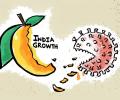
The International Monetary Fund (IMF) on Tuesday cut its economic growth forecast for India to 9.5 per cent for the fiscal year to March 31, 2022 as the onset of a severe second COVID-19 wave cut into recovery momentum. This forecast for 2021-22 is lower than the 12.5 per cent growth in GDP that IMF had projected in April before the second wave took a grip. For 2022-23, IMF expects economic growth of 8.5 per cent, larger than the 6.9 per cent it had projected in April.

tailwinds of a remarkable year and handsome investor returns, Indian equities are set for an eventful journey in 2024, with a slew of local and global cues -- varying from interest rates to Lok Sabha polls to geopolitical happenings. Analysts are of the view that the bull run in the domestic equity market will continue, and over the next 3-6 months, the benchmark indices -- Sensex and Nifty -- could climb up to 7 per cent. In 2023, the 30-share BSE Sensex jumped 11,399.52 points or 18.73 per cent, and the NSE Nifty climbed 3,626.1 points or 20 per cent.

India must be prepared to deal with climate disasters, geopolitical confrontations, and social strife linked to global events, asserts Jayant Sinha, chairman of Parliament's Standing Committee on Finance.

Delaying action on climate change will hurt growth: Global CEOs.
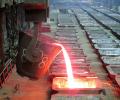
In a significant move to enhance its strategic resource security, India has officially released its first-ever critical minerals list, identifying 30 key critical minerals crucial to the nation's economic growth and technological development. This pioneering step aims at reducing import dependence, enhancing supply-chain resilience, and supporting the country's net-zero objectives. Union Minister Parliamentary Affairs, Coal and Mines Pralhad Joshi, while releasing the Critical Minerals for India report in New Delhi on Wednesday, said, "India is readying for an Atmanirbhar Bharat."

'... and without necessarily calling them Economic Surveys.' 'One should stick to the main focus, which is to give people a good perspective on how the economy is doing.'
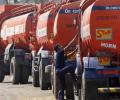
Every time the Indian economy has faced headwinds due to international developments, the oil sector has played a crucial role, explains A K Bhattacharya.

China's GDP growth slowed in the second quarter this year to 7.5 per cent, official data showed on Monday, as the Chinese leadership faced fresh challenges to stimulate and revamp the world's second-biggest economy.

Manufacturing activities in India advanced further and touched a 31-month high in May supported by stronger increase in new orders and favourable market conditions, which in turn generated more employment opportunities, a monthly survey said on Thursday. The seasonally adjusted S&P Global India Manufacturing Purchasing Managers' Index (PMI) rose from 57.2 in April to 58.7 in May, indicating the strongest improvement in the health of the sector since October 2020. The May PMI data pointed to an improvement in overall operating conditions for the 23rd straight month.

Dawtrey said he was planning to quit his job in May and travel to India to train in an academy affiliated with Pro Kabaddi side UP Yoddha.

Jaishankar also spoke about how he expected a change in Russia's direction towards the rest of the world and it may likely want multiple options in Asia.
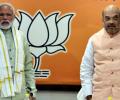
Corporate leaders said a stable government at the Centre will help boost infrastructure spend, address agricultural distress, and encouraging employment.
Two years of economic slowdown has pushed the number of people without jobs worldwide to a record 180 million, with little prospect of any improvement in the global employment situation this year: ILO

Manufacturing sector activities in India moderated in June from a 31-month high in May, but output remained in the growth territory, as new work orders expanded sharply amid favourable demand conditions, a monthly survey said on Monday. The seasonally adjusted S&P Global India Manufacturing Purchasing Managers' Index (PMI) fell from 58.7 in May to 57.8 in June. Despite the fall, the headline figure pointed to a considerable improvement in operating conditions, the survey said, adding that the demand strength positively impacted several other measures such as sales, production, stock building and employment.
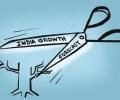
India's real GDP growth will decline marginally to 6.3 per cent in 2024 from the 6.4 per cent estimated for 2023, an American brokerage firm said on Monday. The next calendar year will be of two halves, wherein the government spending before the upcoming General Elections will be the key driver for growth, while after the elections, it will be the re-acceleration in investment growth, especially from the private sector, Goldman Sachs said in a report. From a fiscal year perspective, the brokerage said it expects growth to accelerate to 6.5 per cent for FY25 from the 6.2 per cent it has projected for the ongoing FY24, it added.

Ahead of the upcoming elections, political parties have started announcing incentives to benefit women, but what do women truly seek for genuine gender parity, asks Nivedita Mookerji.

The migration of domestically developed intellectual property to foreign corporations within India reflects an anomaly in the demand pattern of the country's job market, points out Kanika Datta.
